

Is Autism Really Just Genetic? What Every Parent Should Know
Pediatric Chiropractic Support in Fort Collins, Colorado
💡 Key Takeaways for Parents:
Genetics vs. Environment: While over 100 genes are linked to autism risk, known genetic mutations account for only about 10% of cases—meaning environmental and neurological factors play a major role.
The Perfect Storm Cascade: Compounding stressors—such as high maternal pregnancy stress, physical birth trauma (C-section, forceps, vacuum), and early antibiotic cycles—can lock a child's nervous system into fight-or-flight mode.
Measuring Function: Non-invasive CLA INSiGHT Scans allow us to pinpoint where subluxation and dysautonomia are stressing the central nervous system, opening new pathways for regulation and healing.
Autism Doesn't Usually Begin With One Question...
It begins with hundreds.
Why my child?
Did I miss something?
Could I have done anything differently?
What should I do now?
If you're reading this, we want you to hear something first:
You did not cause your child's autism.
And you are not alone in wanting to understand it.
For decades, most conversations about autism have focused on genetics alone.
Today, researchers recognize that autism is much more complex than that. Genetics matter. Environment matters. Early development matters. The nervous system matters.
Rather than asking,
"Is autism genetic?"
we think a better question is:
"What influences how a child's nervous system develops from the very beginning?"
Autism Is Not Only Genetic
As parents, we're constantly navigating the unknown, seeking answers and solutions for our children's well-being. One of the most daunting challenges many of us face is understanding autism and its causes. With autism rates skyrocketing, affecting 1 in 36 children today, it's important that we look into the factors contributing to this complex condition.
Trying to understand autism often begins with one burning question: Is autism genetic? Still today, many of us hold onto the assumption that genetics and heritability solely explain the sharp increases in autism diagnoses and the wide variation in symptoms across the spectrum. Most researchers understand that autism develops through a complex interaction between genetics and many other biological influences. While no single explanation fits every child, looking beyond genetics alone often opens the door to a much deeper understanding.
While genes undoubtedly play a role through genetic predisposition, even traditional medical doctors and media outlets are starting to acknowledge the existence of an "environmental" factor. However, they often stop short at this acknowledgment, leaving the concept of the environment as a vague blanket statement. Here's where we differ – our goal is to take you deep into the real root causes and known triggers of Autism Spectrum Disorders (ASD).
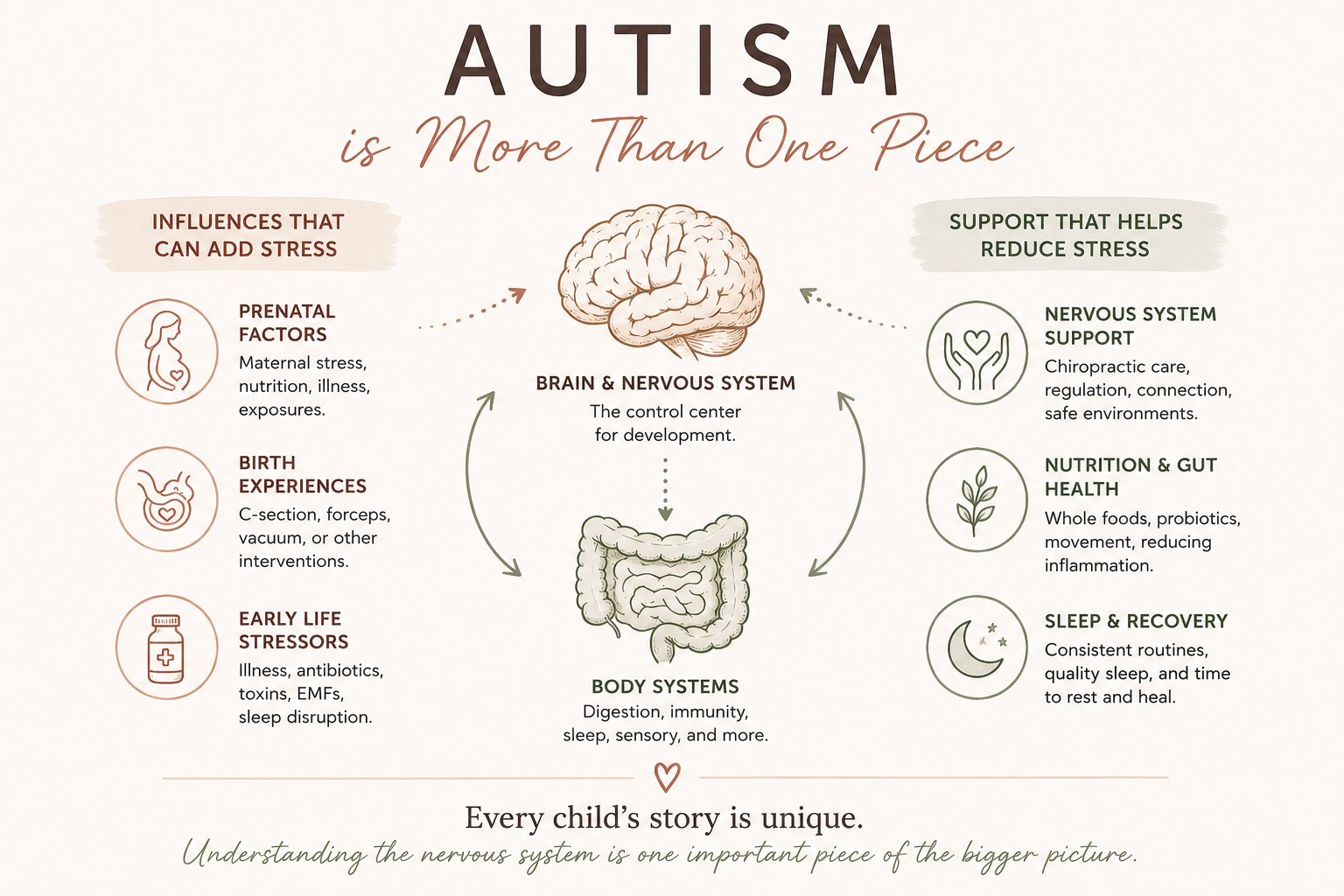
The Perfect Storm: Why Some Children Need More Neurological Support
Instead of looking for one single cause, we encourage parents to think about the accumulation of stress throughout early development. Small stressors may not seem significant on their own, but together they can create what we call the Perfect Storm.
Today, we understand that there's a full-on environmental "Perfect Storm" brewing for children struggling with autism, and genetics only plays a small part in the bigger picture.
This blog is for you, parents, and caregivers of children anywhere on the autism spectrum seeking clarity, community, and care options that dive deep into the true root cause of autism. Rather than simply attributing it to genetics and hoping to navigate around its challenges, we aim to provide understanding and actionable solutions.
We'll introduce what we call “The Perfect Storm," where accumulated stressors and dysfunctions disrupt nervous system function over months and years, altering childhood development. We want to provide you with drug-free answers that will help your child through their storm.
We know without a doubt that genetics alone don't tell the full story when it comes to autism. While over 100 genes contribute to autism risk, mutations account for only 10% of cases. This prompts us to explore the environmental factors that contribute to this condition.
So, what are these environmental factors that matter most? As Neurologically-Focused Chiropractors, we go way back to the beginning. Prenatal or maternal stress emerges as a significant factor in the development of autism. Pregnancy can trigger the start of the Perfect Storm, where your stress as a pregnant mother can affect your baby’s development. If you're stressed during pregnancy and stuck in a fight-or-flight sympathetic stress response, your baby shares those stress hormones through the umbilical cord, which connects your nervous systems.
Birth trauma also plays a pivotal role. During childbirth, interventions like forceps, vacuum extraction, and c-sections can worsen the storm. They exert great pressure on your baby’s head, neck, and delicate brainstem, potentially causing significant physical trauma, especially to the brainstem and nervous system.
This leads to subluxation, and when your child’s nervous system is stressed to the max, other challenges arise. Their immune and digestive systems suffer, resulting in frequent illnesses. Traditional pediatricians often prescribe antibiotics and other medications, which can make things worse by disturbing the gut-brain connection.
And it doesn’t end there. Factors such as exposure to electromagnetic fields (EMFs), household toxins like mold, chemicals in everyday products, and toxins in medications and medical interventions should all be considered.
How the Nervous System Shapes Development
What do these stressors and toxins do to a child's developing nervous system? They create a neurological "tipping point," where the delicate balance is disrupted, and the nervous system becomes locked into a state of sustained fight-or-flight response.
This nervous system dysregulation has far-reaching implications, affecting various aspects of a child's health and development. From compromised gut and immune function to challenges with motor skills, sleep, and inflammation, the ripple effects are profound.
As these challenges accumulate, the brain and nervous system struggle to cope, manifesting in the core elements of autism. Communication difficulties, social interaction challenges, sensory processing issues, stimming, and restricted/repetitive behaviors become apparent indications of this underlying dysregulation.
What You Can Do Today
Whether your child was diagnosed recently or years ago, there are meaningful ways to support their development.
✔ Continue therapies that are helping. Occupational therapy, speech therapy, behavioral support, educational services, and medical care all have an important place. If there is a plateau, incongruence, or a voice in your mom gut telling you there is more, the nervous system can (and is often) the place to start!
✔ Protect sleep as much as possible. Sleep is when the nervous system recovers and organizes new learning.
✔ Prioritize connection over perfection. Calm, connected interactions often support regulation more than constantly trying to "fix" behaviors.
✔ Ask bigger questions. Instead of asking only, "How do we reduce this symptom?" also ask, "How can we better support my child's nervous system?"
Small, consistent support often creates more meaningful progress than constantly searching for the next breakthrough.
We Hear This Story Often
One mom once told us,
"I stopped looking for a cure years ago.
I just wanted my son to be comfortable in his own body."
That conversation has stayed with us.
Because that's what so many families are really searching for.
Not perfection.
Not changing who their child is.
Helping them sleep.
Helping them regulate.
Helping family life feel less overwhelming.
Helping them enjoy birthdays.
Helping them travel.
Helping siblings play together.
Helping parents worry just a little bit less.
Why We Start With the Nervous System
At Soul Full Chiropractic here in Fort Collins, CO, we believe neurologically-focused chiropractic care isn't a replacement for speech therapy, occupational therapy, ABA, nutrition, medical care, or the incredible work families already do every day.
It's one foundational piece of a much bigger picture.
We believe the nervous system influences how every other system communicates, adapts, and responds. That's why we choose to begin there.
What makes our approach different is that we begin by measuring nervous system function using CLA INSiGHT Neurological Scans.
Rather than focusing only on a diagnosis, we evaluate how your child's nervous system is adapting to stress, regulating, and communicating throughout the body before creating an individualized care plan.
Open New Paths to Progress for Your Child
Improvement and healing are possible when you address the master nervous system foundation. You don't have to navigate this journey alone.
👉 Schedule an INSiGHT Neurological Scan in Fort Collins
If you are not local to us, check out the PX Docs directory to find a PX Doc near you!
-
Is autism caused by genetics?
Genetics can play an important role in autism, but they don't explain every case. Researchers continue to study how genetics, prenatal influences, early development, and environmental factors interact in complex ways.
Can chiropractic cure autism?
Our goal isn't to cure autism.
Our goal is to support healthy nervous system function, regulation, and adaptability. Families often seek care to support challenges such as sleep, digestion, sensory processing, and overall quality of life.
Why do you scan children with autism?
INSiGHT Neurological Scans help us objectively measure patterns of nervous system stress and adaptation so we can create a personalized care plan rather than relying only on symptoms.
Can my child continue their other therapies?
Absolutely.
Many families combine neurologically-focused chiropractic care with occupational therapy, speech therapy, behavioral therapies, medical care, and nutritional support.
Many families tell us that as their child becomes more regulated, they're able to participate more fully in the therapies they're already doing!