

What Causes Colic? Understanding Why Babies Cry, Arch Their Back, and Struggle to Settle
Pediatric Chiropractic Support in Fort Collins, CO
💡 Key Takeaways for Parents:
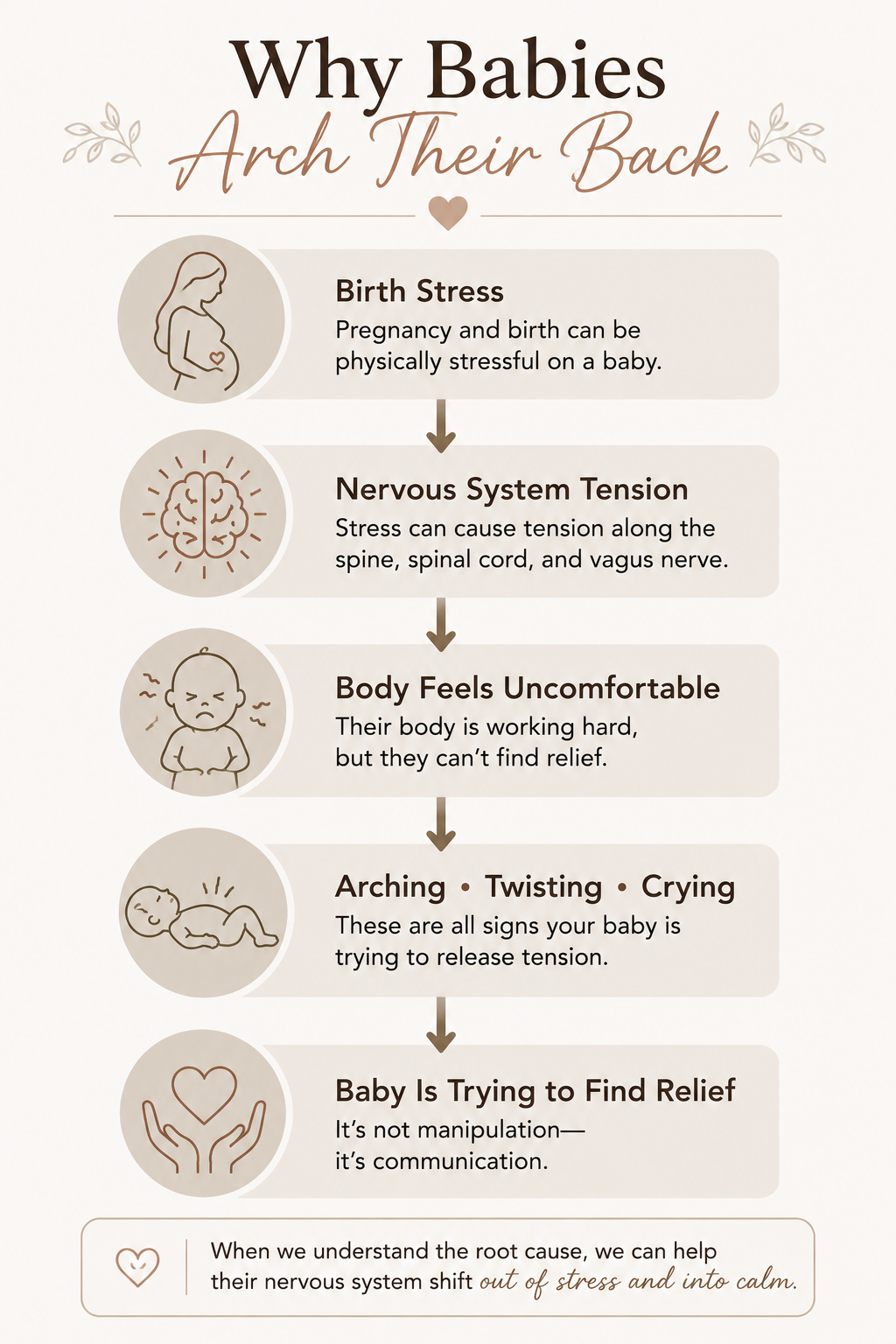
Neurospinal Tension vs. Stretches: When a baby constantly arches their back, cranes their neck, and screams, they are trying to dissipate physical tension locked in their spinal cord and vagus nerve.
The Birth Strain Connection: Fast labor, C-sections, vacuum extraction, or forceps strain the upper neck, locking an infant's nervous system in "fight-or-flight" (sympathetic overdrive).
Gentle Assessment: Non-invasive CLA INSiGHT Scans allow us to pinpoint where autonomic dysregulation is stored without pain or radiation.
You Know Something Isn't Right
There are few things more heartbreaking than watching your baby cry for hours while feeling completely helpless.
You've bounced.
Rocked.
Swaddled.
Changed your diet.
Tried gas drops.
Gone on car rides at midnight.
And somewhere in the middle of another exhausting night, you've probably wondered...
"Is this really normal?"
If your baby seems uncomfortable all the time—arching their back, pulling their legs up, refusing to settle, crying for hours—you aren't overreacting.
And you aren't alone.
Every Baby Cries. Colic Is Different.
Every baby cries.
They're hungry.
They're tired.
They need to be held.
That's normal.
Colic feels different.
It often looks like:
• Crying for hours despite every soothing strategy
• Arching the back
• Pulling the knees up
• Becoming uncomfortable after feeding
• Seeming impossible to console
• Parents saying,
"It's like they're in pain."
If that's your experience, it's worth looking deeper.
(need title)
Infantile colic is a condition that can be both frustrating and controversial for parents. Many conventional pediatricians mistakenly state that "some babies just get colic" and "don't worry, they'll grow out of it." However, there is ongoing debate about the root causes of colic and how babies develop this condition. In this blog post, we'll break down the science behind colic, keep it simple, and discuss safe and natural ways to help ease your little one's constant crying and discomfort.
If your baby is struggling with colic and you’re desperate for answers and relief from the constant crying and sleepless nights, this is for you! If your gut is telling you that it’s not normal that your baby is constantly crying, uncomfortable, arching their back, and cranking their neck to try and find some relief - keep reading.
We are going to reveal how overall neurological function can resolve many of your child’s health struggles! Learn gentle ways to stimulate the nervous system, plus specialized chiropractic care to detect and address vagus nerve dysfunction without drugs or surgery.
Why Some Babies Develop Colic
One of the most overlooked yet obvious initial triggers of colic is an overstressed and subluxated nervous system. At Soul Full Chiropractic, we often find that the vast majority of colic patients have at least one of the following stressors in their case history:
A high-stress or high-risk pregnancy
Birth interventions such as forceps, vacuum extraction, induction, epidural, or c-section that can physically injure and alter the function of the nerves and muscles of the upper neck
These interventions can impact various functions, including sleeping, latching, breastfeeding, swallowing, digestion, and gross motor development, like turning the head and tummy time. These common initial stressors can cause the infant's nervous system to become highly sensitive and stuck in a sympathetic fight or flight mode.
Sympathetic Dominance and Its Effects
When an infant's nervous system is stuck in a sympathetic fight or flight mode, they may struggle with basic health functions such as sleeping, eating, pooping, and moving. Parents often innately know that something within their little one's body is not working well, including both "internal" muscles that control digestion and "external" muscles of the neck and spine. This is why infants with colic often struggle more after eating and are constantly arching their neck and back.
Many parents of colicky infants have already tried removing dairy and other common foods that have a higher risk of allergies and intolerances. Some families have also had their children's tongue or oral ties surgically revised and clipped. While tongue and oral ties can cause trouble with latching, nursing, and discomfort, it's essential to look deeper at the root cause of these issues. If a child's nervous system is stuck in a sympathetic fight or flight mode, it can leave all the muscles and ligaments of the body extra wound tight and tense. Even if the tongue and oral ties are surgically revised, the tension may remain in the nervous system and other important parts of the body.
Looking Beyond the Stomach
While most people look to the stomach or digestive system for the root cause of colic, it's often found even deeper within the nervous system and its control and coordination of digestive motility, absorption, and elimination. When tension and subluxation build up along the neurospinal system, a colicky baby will often arch their back and crane their neck, trying to release or dissipate that tension themselves. This is an almost sure sign that the root cause of their discomfort is neurospinal discomfort and tension, not merely digestive dysfunction.
Neurologically-Focused Chiropractic Care is a gentle, non-invasive approach that can help address the underlying neurological factors contributing to colic. Neurologically-Focused Pediatric Chiropractors are specifically trained to identify and correct subluxations (misalignments) in the spine that can interfere with proper nervous system function. By restoring balance to the nervous system, chiropractic care can help relieve symptoms of colic and promote overall health and well-being in infants.
At Soul Full Chiropractic in Fort Collins, Colorado, our doctors use a combination of thorough assessments and advanced technology called Neurological INSiGHT Scans to detect and measure the presence of subluxation and neurological dysfunction or sympathetic dominance in colicky infants. This targeted approach allows us to develop personalized care plans that address each child's unique needs.
Jackson’s Story of Hope
Consider the story of baby Jackson, who struggled with bad reflux, gas pains, and trouble sleeping at night as an infant. Jackson's mom shared, "It was very difficult for us to try and navigate being first-time parents and having Jackson struggling with these issues! It was hard to see Jackson so upset and unhappy because he was always so uncomfortable."
Fortunately, Jackson's parents took action and brought him to their holistic pediatrician, who always looked for the root cause of a child's struggles rather than just treating the symptoms. Recognizing that the stress of a very fast labor and delivery could be part of the root cause, the pediatrician referred Jackson to a pediatric chiropractor.
Jackson's mom reported, "Jackson started getting adjusted when he was 9 weeks old, and within the first couple of weeks, we definitely started to see changes! We first noticed that he was no longer having constant gas pains and didn't seem as uncomfortable anymore. Within the first month, his colic seemed to disappear, and we started to see Jackson's happy and silly personality coming through."
With continued care, Jackson transformed into "a completely different baby" compared to when he first started treatment. His colic and stomach pains were completely gone, his reflux had improved, and he was even sleeping through the night! Now, as a toddler, Jackson's mom says, "He is truly the happiest and is always smiling and laughing. We could not be more thankful to have found our pediatric chiropractor – they've taught us so much about chiropractic care and the benefits it could provide to Jackson. Thank you for giving us our happy boy back!"
Every baby's story is different, and no healthcare provider can promise a specific outcome. But stories like Jackson's remind us why we believe it's worth asking deeper questions when something doesn't feel right.
What You Can Do Today
If your baby is struggling with colic, there are a few gentle things you can begin doing today while continuing to work with your healthcare providers.
Feed in calm environments whenever possible.
Reducing noise, bright lights, and overstimulation may help babies who already have an overwhelmed nervous system.
Burp often and change positions slowly.
Giving your baby's body time to adjust can reduce additional stress during feedings.
Take breaks for yourself.
A baby's nervous system is deeply connected to their caregivers through co-regulation. Caring for yourself matters too.
Trust your instincts.
If something doesn't feel right, keep asking questions. You know your baby better than anyone.
Why We Measure the Nervous System
At Soul Full Chiropractic, we don't begin by guessing.
We begin by listening.
Then we measure.
Using gentle, non-invasive CLA INSiGHT Neurological Scans, we evaluate patterns of muscle activity, autonomic nervous system function, and stress adaptation to better understand how your baby's nervous system is functioning.
Combined with a detailed pregnancy, birth, and developmental history, these scans help us build a personalized care plan based on your baby's unique needs—not just their symptoms.
Neurologically-focused chiropractic care isn't meant to replace your pediatrician, lactation consultant, or other healthcare providers. It's one piece of a comprehensive approach that focuses on helping the nervous system function at its best.
In addition to helping alleviate the symptoms of colic, chiropractic care can offer a range of other benefits for infants and children. These may include:
Improved sleep quality and duration
Enhanced immune system function
Better digestion and reduced digestive discomfort
Increased range of motion and flexibility
Support for healthy brain and nervous system development
It's important to note that chiropractic care is not a "one-size-fits-all" solution, and results may vary from child to child. However, many parents have reported significant improvements in their babies' comfort, happiness, and overall well-being following chiropractic care.
Help Your Baby Shift Out of Pain & Into Calm
If you are ready to find real answers and drug-free solutions for your baby's colic, you don't have to spend another exhausting night wondering if there is hope.
👉 Schedule a New Patient Consultation & INSiGHT Scan in Fort Collins
(If you are not local to us, please check out the PX Docs directory to find a PX Doc near you.)
Your baby's crying isn't a sign that you're doing something wrong.
It's communication.
Sometimes babies are hungry.
Sometimes they're tired.
And sometimes their nervous system is asking for help.
You deserve answers.
And your baby deserves to be heard.
-
Is colic normal?
Some crying is completely normal for babies.
If your baby seems persistently uncomfortable, difficult to console, or you're concerned something isn't right, it's always appropriate to discuss those concerns with your pediatric healthcare provider.
Can birth affect my baby's nervous system?
Pregnancy and birth are significant physical events, and every baby responds differently. Factors such as a long labor, a very fast delivery, or birth interventions may contribute to physical stress on a newborn's body, which is one reason we take such a detailed birth history.
Are INSiGHT Scans safe for babies?
Yes.
The scans are gentle, non-invasive, and radiation-free. They measure patterns of nervous system function without causing discomfort.
How gentle are infant adjustments?
Infant adjustments are incredibly gentle—typically using no more pressure than you would use to check whether a tomato or avocado is ripe.